
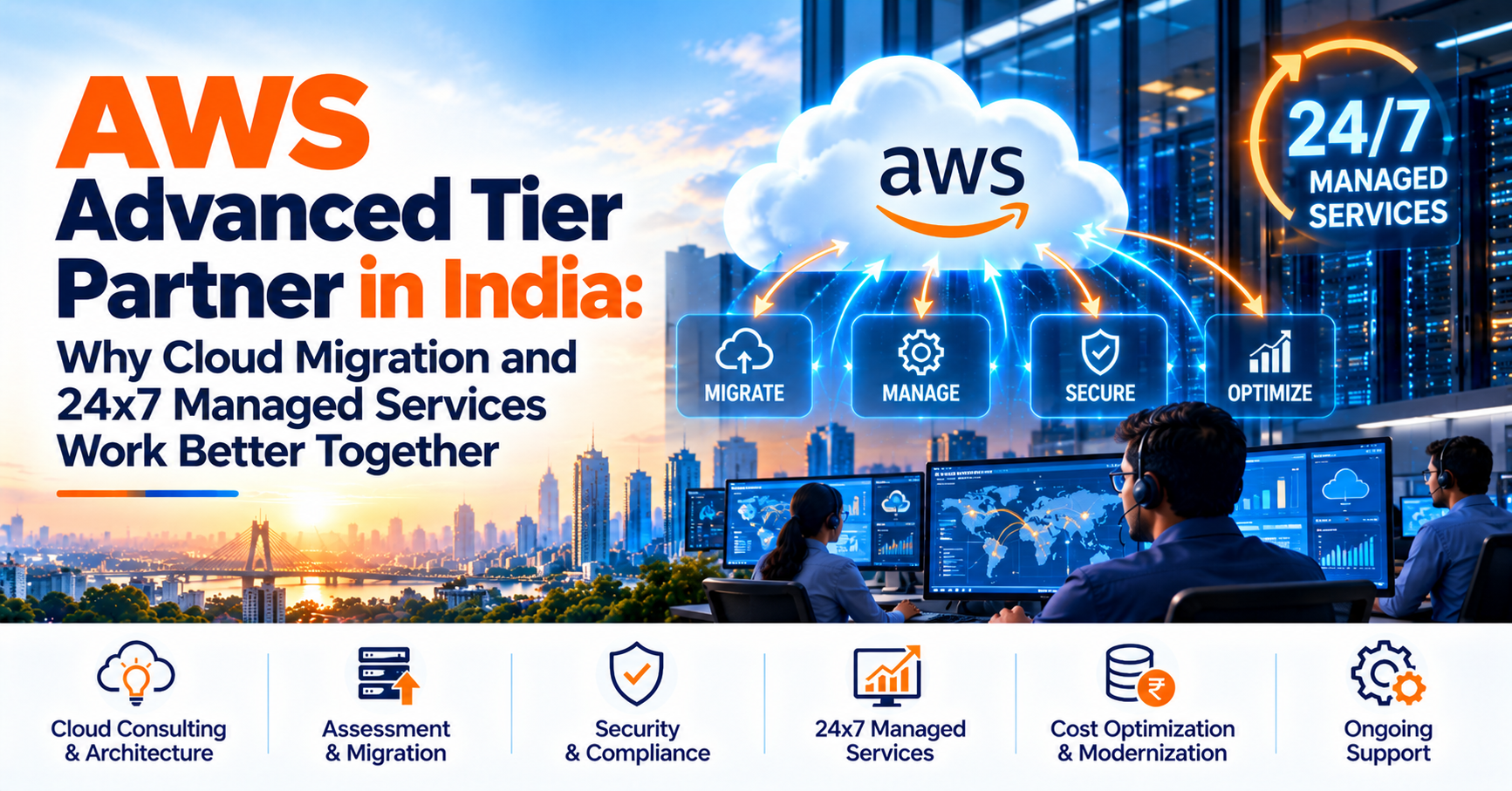
AWS Advanced Tier Partner in India: Why Cloud Migration and 24x7 Managed Services Work Better Together
Moving business applications to Amazon Web Services (AWS) is an important step towards building a scalable, flexible and modern IT infrastructure. However, migration is only one part of the cloud journey. Once applications are running in the cloud, businesses must also manage security, performance, availability and ongoing expenditure.
This is why organizations should evaluate both cloud implementation expertise and long-term operational support when choosing an AWS partner.
Working with an AWS Advanced Tier Partner in India that can support cloud consulting, migration and managed services may help businesses establish a more structured approach to cloud adoption.
Why Cloud Migration Is Only the Beginning
Cloud migration involves moving applications, databases, workloads and data from existing infrastructure to AWS. The process requires planning, compatibility checks, architecture decisions, testing and production deployment.
But completing a migration does not automatically mean the environment is optimized.
Applications may need performance adjustments as traffic grows. Security configurations require regular review. Backups must be monitored, and cloud expenditure needs ongoing attention. Without clear operational ownership, these responsibilities can become difficult for internal IT teams to manage.
Businesses should therefore consider their post-migration operating model before starting the project.
1. Choose a Cloud Partner With the Right Expertise
The right cloud partner should understand the organization's business goals, current infrastructure, technical constraints and future requirements.
An engagement may begin with infrastructure assessment and cloud architecture planning, followed by migration, implementation, testing and handover. The partner should also explain how ongoing support will work once the production environment is operational.
For businesses evaluating partner credentials and capabilities, Cogenerate's AWS Advanced Tier Partner services provide a starting point for exploring its cloud consulting, migration, security and managed cloud offerings.
Partnership status should be considered alongside technical experience, clearly defined deliverables, security practices and the scope of services included in the agreement.
2. Plan Migration With Security and Performance in Mind
A successful AWS migration begins with understanding the existing environment.
The assessment should identify application dependencies, data volumes, performance requirements, security risks and acceptable downtime. Based on these findings, the implementation team can recommend an appropriate migration strategy.
Security should be incorporated into the architecture from the beginning. Relevant measures may include identity and access management, encryption, network controls, monitoring, backup policies and vulnerability management.
Testing is equally important. Before production cutover, businesses should validate application functionality, data integrity, performance and recovery procedures.
A structured migration process reduces uncertainty and gives the organization a clearer understanding of its technical and operational responsibilities.
3. Why 24x7 AWS Managed Services Matter After Migration
Once workloads are running on AWS, infrastructure and applications require continuing attention.
An unexpected resource spike, application failure, security alert or backup problem can occur outside regular office hours. If nobody is responsible for investigating alerts, an operational issue may remain unresolved longer than necessary.
Cogenerate's 24x7 AWS managed services can be explored by businesses looking for ongoing cloud operations support. Depending on the agreed scope, managed services may include continuous monitoring, incident response, patch management, backup oversight, performance tuning and cost optimization.
Before engaging a provider, confirm whether round-the-clock coverage includes active incident response, how issues are escalated and which response targets are contractually agreed.
Continuous monitoring is valuable, but the actual support commitment should always be defined in the service agreement.
4. Improve Cloud Cost Visibility and Operational Efficiency
AWS provides flexible pricing models, but cloud costs can become difficult to predict when resource usage changes.
Oversized compute instances, idle development environments, unnecessary storage and inefficient data transfer can contribute to avoidable expenditure.
A combined consulting and managed services approach can help businesses address these issues at different stages.
During planning, the consulting team can estimate expected consumption and recommend an appropriate architecture. After deployment, operational reviews can identify underutilized resources, unexpected usage and opportunities for right-sizing.
Organizations should also establish budgets, cost allocation practices and regular billing reviews. Any optimization should be assessed against application performance, security and availability requirements.
The objective is not simply to reduce the AWS bill, but to achieve a sustainable balance between cost and business needs.
5. Establish Clear Responsibilities After Go-Live
Cloud operations work best when responsibilities are agreed upon before deployment.
The organization should identify who manages access permissions, monitors infrastructure, applies patches, investigates alerts, verifies backups and coordinates recovery activities.
The agreement should also define reporting frequency, escalation contacts, documentation requirements and the process for handling changes.
Businesses with internal IT teams may choose a shared operational model, while organizations with limited cloud expertise may prefer broader managed support.
Neither model is universally better. The right choice depends on workload criticality, internal skills, budget and operational requirements.
6. Build a Long-Term AWS Strategy
Cloud adoption should be treated as an ongoing improvement process rather than a one-time infrastructure project.
As business requirements change, organizations may need to modernize applications, adjust capacity, improve resilience or introduce automation.
A partner that understands the complete cloud lifecycle can help connect initial architecture decisions with ongoing operational needs. However, the scope of each engagement should remain clear, with measurable deliverables and agreed responsibilities.
Cogenerate provides cloud-related consulting, migration and managed services capabilities for organizations evaluating their AWS requirements.
Businesses can explore Cogenerate's AWS Advanced Tier Partner page to review its service portfolio and determine which capabilities may fit their cloud strategy.
Conclusion
Cloud migration creates the foundation for modern infrastructure, but long-term success depends on how that environment is operated, secured and optimized.
By evaluating cloud consulting expertise alongside 24x7 managed services, businesses can plan for both implementation and ongoing operations. A clear scope, transparent service commitments and regular performance reviews help organizations make informed decisions throughout their AWS journey.
Explore Cogenerate's AWS Advanced Tier Partner services and 24x7 managed cloud services to learn more about the available options.
Frequently Asked Questions
What is an AWS Advanced Tier Partner?
An AWS Advanced Tier Partner is an organization recognized within the AWS Partner Network at the Advanced tier under the applicable partner program. Businesses should verify current partner status and relevant technical capabilities when selecting a provider.
Why are managed services important after AWS migration?
Managed services can provide ongoing monitoring, incident response, patch management, backup oversight and optimization. The exact coverage depends on the agreement with the provider.
Can one AWS partner support both migration and managed services?
Yes. A provider may offer both migration and ongoing operational support. Businesses should confirm the specific capabilities, deliverables and contractual scope before engaging the provider.
How do 24x7 AWS managed services help businesses?
Depending on the service agreement, they can provide round-the-clock monitoring and incident handling, helping teams identify operational issues and respond according to agreed procedures.
How can businesses reduce AWS operating costs after migration?
Businesses can review resource utilization, right-size infrastructure, remove idle resources, optimize storage and data transfer, and monitor consumption regularly.
How can I explore Cogenerate's AWS services?
Visit the AWS Advanced Tier Partner page for partner and consulting information, or explore the 24x7 managed services page for operational support details.